-
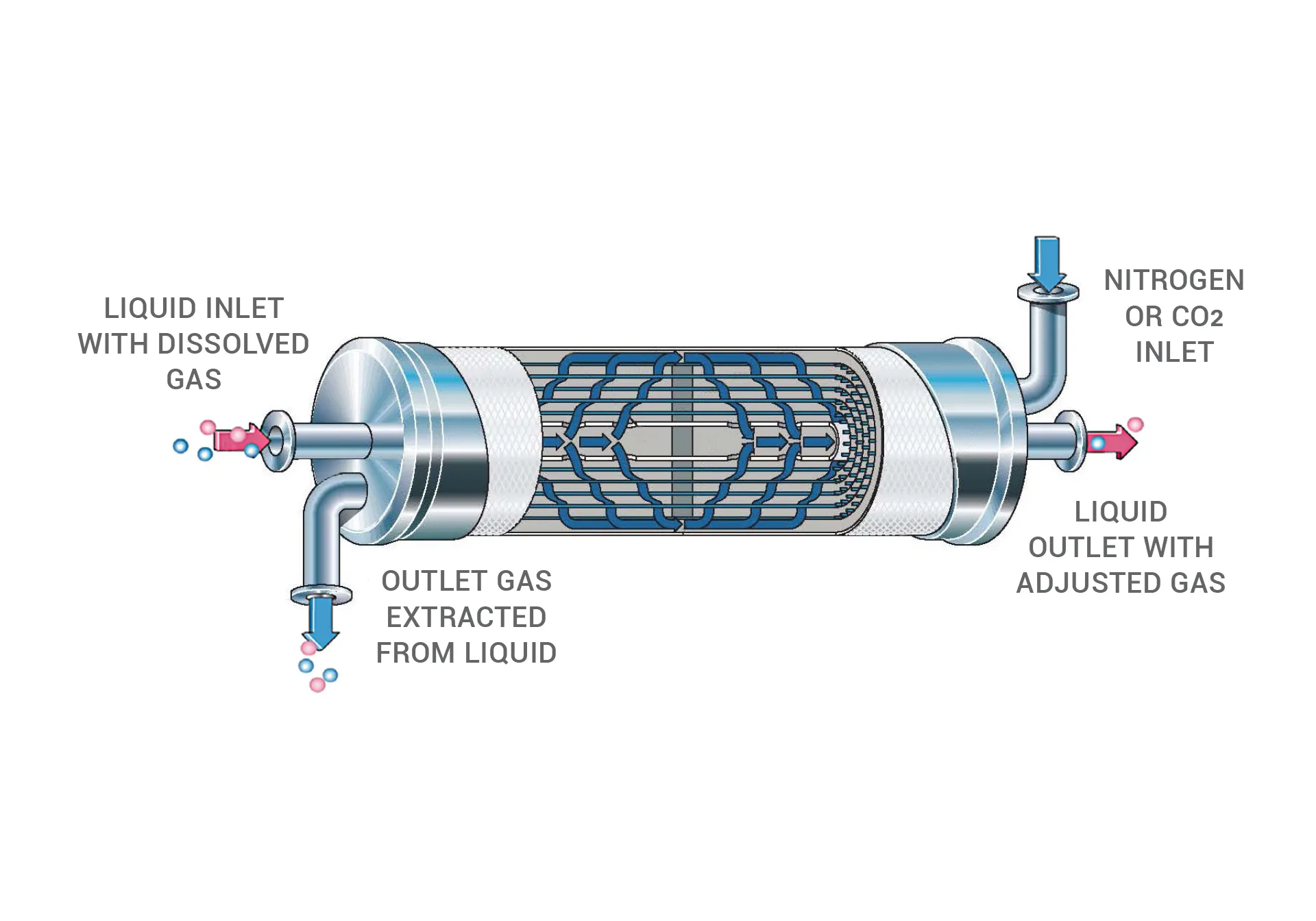
A hydrophobic membrane, also known as a membrane contactor, is a hollow-fibre module where the gas flows inside the fibres (the lumen side) while the wine flows outside the fibres in the opposite direction (the shell side).
Driven by the difference in concentration and partial pressure between the two phases, a highly controlled gas exchange takes place. This allows gas concentration to be regulated in a gentle, non-invasive manner, avoiding direct contact between the technical gas and the wine — unlike traditional stripping or sparging techniques.
The selective exchange between the different gas molecules dissolved in the wine is governed by the difference in their molecular weights.
During this fully automated adjustment process, precision sensors measure gas concentration levels in real time, guaranteeing absolute calibration accuracy.
MOLECULAR MEMBRANE CONTACTOR TECHNOLOGY: HOW IT WORKS